11 Beautiful Hadith About Marriage In Islam – Besthadith
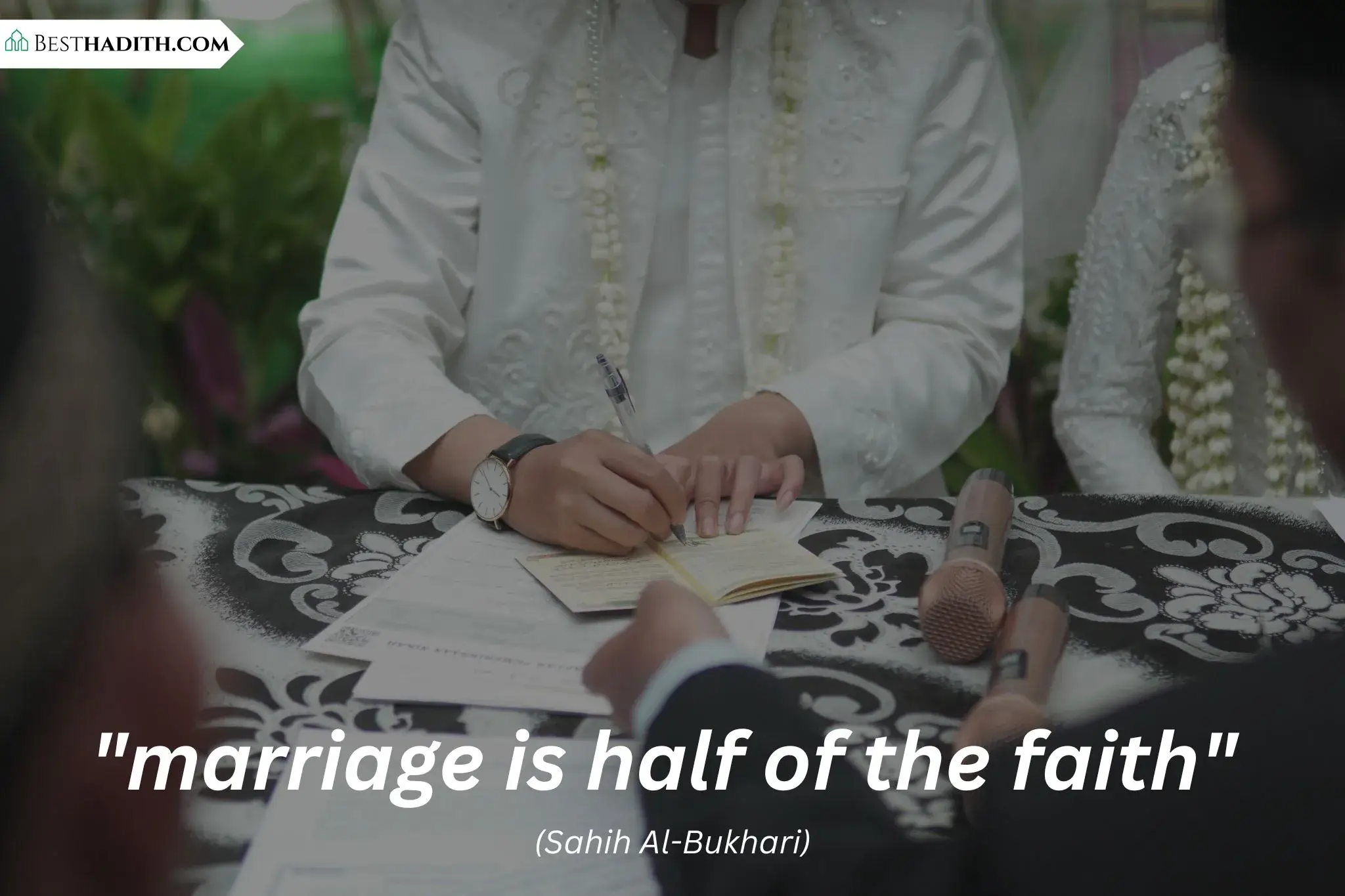
Marriage? It’s kinda a big deal in Islam. We call it “nikkah”. The Prophet (peace be upon him) even said it completes half your faith! It’s about love, having kids the right way, building a strong family…all that good stuff. Muts read these Beautiful Hadith About Marriage. Keeps you on the straight path, away from the trouble!
Hadith about marriage
Allah’s Messenger (ﷺ) said,
“O, young people! Whoever among you can marry, should marry, because it helps him lower his gaze and guard his modesty (i.e. his private parts from committing illegal sexual intercourse, etc.), and whoever is not able to marry, should fast, as fasting diminishes his sexual power.”
(Sahih al-Bukhari 5066)
Hadith About wedding In Arabic
قَالَ رَسُولُ اللَّهِ ـ صلى الله عليه وسلم ـ “ يَا مَعْشَرَ الشَّبَابِ مَنِ اسْتَطَاعَ مِنْكُمُ الْبَاءَةَ فَلْيَتَزَوَّجْ فَإِنَّهُ أَغَضُّ لِلْبَصَرِ وَأَحْصَنُ لِلْفَرْجِ وَمَنْ لَمْ يَسْتَطِعْ فَعَلَيْهِ بِالصَّوْمِ فَإِنَّهُ لَهُ وِجَاءٌ ” . (صحیح البخاری 5066)
Hadith About Nikkah In Urdu
حضور اکرم صلی اللہ علیہ وسلم نے ہم سے فرمایا ، نوجوانوں کی جماعت ! تم میں جسے بھی نکاح کرنے کے لئے مالی طاقت ہو اسے نکاح کر لینا چاہئے کیونکہ یہ نظر کو نیچی رکھنے والا اور شرمگاہ کی حفاظت کرنے والا عمل ہے اور جو کوئی نکاح کی بوجہ غربت طاقت نہ رکھتا ہو اسے چاہیے کہ روزہ رکھے کیونکہ روزہ اس کی خواہشات نفسانی کو توڑ دے گا ۔
(صحیح البخاری 5066)
The Prophet Muhammad (ﷺ) said:
“A woman may be married for four things: Her wealth, her lineage, her beauty or for her religion. Choose the religious, may your hands be rubbed with dust (i.e., may you prosper).”
Sunan Ibn Majah 1858
In Arabic
أَنَّ رَسُولَ اللَّهِ ـ صلى الله عليه وسلم ـ قَالَ “ تُنْكَحُ النِّسَاءُ لأَرْبَعٍ لِمَالِهَا وَلِحَسَبِهَا وَلِجَمَالِهَا وَلِدِينِهَا . فَاظْفَرْ بِذَاتِ الدِّينِ تَرِبَتْ يَدَاكَ ” .
The Prophet Muhammad (ﷺ) said:
“Marriage is part of my sunnah, and whoever does not follow my sunnah has nothing to do with me. Get married, for I will boast of your great numbers before the nations. Whoever has the means, let him get married, and whoever does not, then he should fast for it will diminish his desire.”
Sunan Ibn Majah 1846
In Arabic
قَالَ رَسُولُ اللَّهِ ـ صلى الله عليه وسلم ـ “ النِّكَاحُ مِنْ سُنَّتِي فَمَنْ لَمْ يَعْمَلْ بِسُنَّتِي فَلَيْسَ مِنِّي وَتَزَوَّجُوا فَإِنِّي مُكَاثِرٌ بِكُمُ الأُمَمَ وَمَنْ كَانَ ذَا طَوْلٍ فَلْيَنْكِحْ وَمَنْ لَمْ يَجِدْ فَعَلَيْهِ بِالصِّيَامِ فَإِنَّ الصَّوْمَ لَهُ وِجَاءٌ ” .
the Prophet Muhammad (ﷺ) said:
“There is nothing like marriage, for two who love one another.”
Sunan Ibn Majah 1847
In Arabic
قَالَ رَسُولُ اللَّهِ ـ صلى الله عليه وسلم ـ “ لَمْ نَرَ لِلْمُتَحَابَّيْنِ مِثْلَ النِّكَاحِ ” .
It was narrated from Samurah that:
the Messenger of Allah(ﷺ) forbade celibacy. Zaid bin Akhzam added: “And Qatadah recited: ‘And indeed We sent Messengers before you (O Muhammad (ﷺ)), and made for them wives and offspring.’”
Sunan Ibn Majah 1849
In Arabic
دَّثَنَا بِشْرُ بْنُ آدَمَ، وَزَيْدُ بْنُ أَخْزَمَ، قَالاَ حَدَّثَنَا مُعَاذُ بْنُ هِشَامٍ، حَدَّثَنَا أَبِي، عَنْ قَتَادَةَ، عَنِ الْحَسَنِ، عَنْ سَمُرَةَ، . أَنَّ رَسُولَ اللَّهِ ـ صلى الله عليه وسلم ـ نَهَى عَنِ التَّبَتُّلِ . زَادَ زَيْدُ بْنُ أَخْزَمَ وَقَرَأَ قَتَادَةُ {وَلَقَدْ أَرْسَلْنَا رُسُلاً مِنْ قَبْلِكَ وَجَعَلْنَا لَهُمْ أَزْوَاجًا وَذُرِّيَّةً} .
A man asked the Prophet(ﷺ):
“What are the right of the woman over her husband?” He said: “That he should feed her as he feeds himself and clothe her as he clothes himself; he should not strike her on the face nor disfigure her, and he should not abandon her except in the house (as a form of discipline).” (Hassan)
Sunan Ibn Majah 1850
In Arabic
أَنَّ رَجُلاً، سَأَلَ النَّبِيَّ ـ صلى الله عليه وسلم ـ مَا حَقُّ الْمَرْأَةِ عَلَى الزَّوْجِ قَالَ “ أَنْ يُطْعِمَهَا إِذَا طَعِمَ وَأَنْ يَكْسُوَهَا إِذَا اكْتَسَى وَلاَ يَضْرِبِ الْوَجْهَ وَلاَ يُقَبِّحْ وَلاَ يَهْجُرْ إِلاَّ فِي الْبَيْتِ ”
It was narrated that Sulaiman bin Amr bin Ahwas said:
“My father told me that he was present at the Farewell Pilgrimage with the Messenger of Allah (ﷺ). He praised and glorified Allah, and reminded and exhorted (the people). Then he said: ‘I enjoin good treatment of women, for they are prisoners with you, and you have no right to treat them otherwise, unless they commit clear indecency. If they do that, then forsake them in their beds and hit them, but without causing injury or leaving a mark. If they obey you, then do not seek means of annoyance against them. You have rights over your women and your women have rights over you. Your rights over your women are that they are not to allow anyone whom you dislike to tread on your bedding (furniture), nor allow anyone whom you dislike to enter your houses. And their right over you are that you should treat them kindly with regard to their clothing and food.’ ”
Sunan Ibn Majah 1851
In Arabic
عَنْ سُلَيْمَانَ بْنِ عَمْرِو بْنِ الأَحْوَصِ، حَدَّثَنِي أَبِي أَنَّهُ، شَهِدَ حِجَّةَ الْوَدَاعِ مَعَ رَسُولِ اللَّهِ ـ صلى الله عليه وسلم ـ فَحَمِدَ اللَّهَ وَأَثْنَى عَلَيْهِ وَذَكَّرَ وَوَعَظَ ثُمَّ قَالَ “ اسْتَوْصُوا بِالنِّسَاءِ خَيْرًا فَإِنَّمَا هُنَّ عِنْدَكُمْ عَوَانٍ . لَيْسَ تَمْلِكُونَ مِنْهُنَّ شَيْئًا غَيْرَ ذَلِكَ إِلاَّ أَنْ يَأْتِينَ بِفَاحِشَةٍ مُبَيِّنَةٍ فَإِنْ فَعَلْنَ فَاهْجُرُوهُنَّ فِي الْمَضَاجِعِ وَاضْرِبُوهُنَّ ضَرْبًا غَيْرَ مُبَرِّحٍ فَإِنْ أَطَعْنَكُمْ فَلاَ تَبْغُوا عَلَيْهِنَّ سَبِيلاً إِنَّ لَكُمْ مِنْ نِسَائِكُمْ حَقًّا وَلِنِسَائِكُمْ عَلَيْكُمْ حَقًّا فَأَمَّا حَقُّكُمْ عَلَى نِسَائِكُمْ فَلاَ يُوطِئْنَ فُرُشَكُمْ مَنْ تَكْرَهُونَ وَلاَ يَأْذَنَّ فِي بُيُوتِكُمُ لِمَنْ تَكْرَهُونَ أَلاَ وَحَقُّهُنَّ عَلَيْكُمْ أَنْ تُحْسِنُوا إِلَيْهِنَّ فِي كِسْوَتِهِنَّ وَطَعَامِهِنَّ ” .
It was narrated from Aishah, that the Messenger of Allah said:
“If I were to command anyone to prostrate to anyone else, I would have commanded women to prostrate to their husbands. If a man were to command his wife to move (something) from a red mountain to a black mountain, and from a black mountain to a red mountain, her duty is to obey to him.”
Sunan Ibn Majah 1852
In Arabic
عَنْ عَائِشَةَ، أَنَّ رَسُولَ اللَّهِ ـ صلى الله عليه وسلم ـ قَالَ “ لَوْ أَمَرْتُ أَحَدًا أَنْ يَسْجُدَ لأَحَدٍ لأَمَرْتُ الْمَرْأَةَ أَنْ تَسْجُدَ لِزَوْجِهَا وَلَوْ أَنَّ رَجُلاً أَمَرَ امْرَأَةً أَنْ تَنْقُلَ مِنْ جَبَلٍ أَحْمَرَ إِلَى جَبَلٍ أَسْوَدَ وَمِنْ جَبَلٍ أَسْوَدَ إِلَى جَبَلٍ أَحْمَرَ – لَكَانَ نَوْلُهَا أَنْ تَفْعَلَ ” .
she heard Umm Salamah say: “I heard the Messenger of Allah (ﷺ) say:
‘Any woman who dies when her husband is pleased with her, will enter Paradise.’ ”
Sunan Ibn Majah 1854
In Arabic
قَالَتْ سَمِعْتُ أُمَّ سَلَمَةَ، تَقُولُ سَمِعْتُ رَسُولَ اللَّهِ ـ صلى الله عليه وسلم ـ يَقُولُ “ أَيُّمَا امْرَأَةٍ مَاتَتْ وَزَوْجُهَا عَنْهَا رَاضٍ دَخَلَتِ الْجَنَّةَ ” .
It was narrated that from Abdullah bin Amr that :
the Prophet Muhammad (ﷺ) said:
“This world is but provisions, and there is no provision in this world better than a righteous wife.”
Sunan Ibn Majah 1855
In Arabic
عَنْ عَبْدِ اللَّهِ بْنِ عَمْرٍو، أَنَّ رَسُولَ اللَّهِ ـ صلى الله عليه وسلم ـ قَالَ “ إِنَّمَا الدُّنْيَا مَتَاعٌ وَلَيْسَ مِنْ مَتَاعِ الدُّنْيَا شَىْءٌ أَفْضَلَ مِنَ الْمَرْأَةِ الصَّالِحَةِ ” .
Hadith about Marriage Night
Aisha (Radi Allahu Anha) the wife of the Prophet Muhammad (ﷺ) reported
when a woman was married, the Prophet (peace be upon him) would say, “O Allah, bless them, bless their family, and bless their marriage.”
(Sunan Ibn Majah, Book 9, Hadith 1841)
Hadith about Marriage and Sustenance
The Messenger of Allah (ﷺ) said:
“There are three for whom it is a right upon Allah to help him: The Mujahid in the cause of Allah, the Mukatab who intends to fulfill (the Kitabah), and the one getting married who intends chastity.”
(Jami` at-Tirmidhi 1655)
(Abu ‘Eisa said: This Hadith is Hasan)
Conclusion
The Prophet (peace be upon him) said marriage is a GOOD thing! Especially when you’re young, it helps you stay on the right path. He even gave blessings to newlyweds. If your intentions are pure, Allah helps you out, too. Also, read hadith about love.